
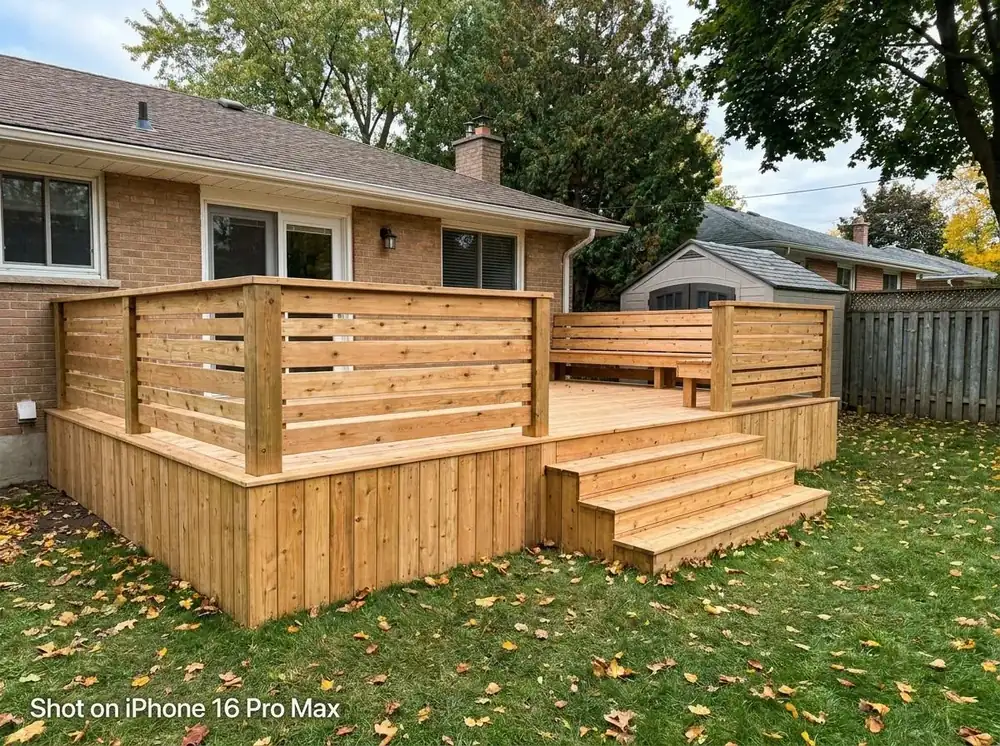
Wood vs. Composite Decking in London Ontario: Which Should You Choose?
Building a new deck in London means choosing between two main decking materials: traditional pressure-treated (or cedar) wood, and modern composite. Both build a beautiful, solid deck — the difference is in cost, maintenance and how they handle years of Ontario sun, rain and snow. Here's how to decide.
Upfront Cost
Wood wins on initial price. Pressure-treated lumber is the most affordable decking material and remains the most common choice for London decks. Cedar costs more but offers natural beauty and rot resistance. Composite decking has a noticeably higher upfront cost — often significantly more than pressure-treated for the boards alone. If your budget is the deciding factor right now, wood is the accessible option.
Maintenance — The Real Difference
This is where composite earns its premium. A wood deck needs ongoing care: cleaning, and re-staining or sealing every couple of years to protect it from moisture, UV and our freeze-thaw winters. Skip that upkeep and wood greys, cracks and can rot over time. Composite is essentially maintenance-free — no staining, no sealing, just an occasional wash. Over a decade, the hours and dollars you save on maintenance can offset much of composite's higher purchase price.
Longevity and Appearance
Well-maintained wood can last many years and has a warmth that's hard to beat — but it requires that maintenance to get there. Composite resists fading, staining, splintering and insects, and holds its colour with very little effort, which matters under London's strong summer sun and snowy winters. The trade-off some homeowners note is that composite can feel less "natural" underfoot, though modern boards have come a long way in looking like real wood.
How Each Handles Our Climate
London's freeze-thaw cycles are tough on outdoor structures. Wood expands, contracts and can check or warp if not sealed and built properly. Composite is more dimensionally stable and won't rot, which is a real advantage for a surface that spends months under snow. Either way, the substructure — joists, posts and footings — should be pressure-treated lumber set on proper footings below the frost line, regardless of which decking you choose on top.
So Which Should You Pick?
Choose wood if you want the lowest upfront cost, love the natural look, and don't mind periodic staining. Choose composite if you'd rather pay more once and barely think about maintenance again. Both are excellent when built well — and building well is the part that matters most. See our process on the deck building page, and if you're pairing the deck with a patio, our hardscaping crew can tie the two together.
Dreaming of a New Deck?
Free quotes on wood and composite decks across London and area.
Get a Free Quote